
Mold Removal & Remediation in Plano, TX
Describe the mold once and independent, TDLR-licensed Texas companies reply with free quotes. This page explains what a legal mold job in Texas looks like, what it usually costs and what to ask before anyone cuts into a wall.
Get a Free Quote Call (972) 472-8749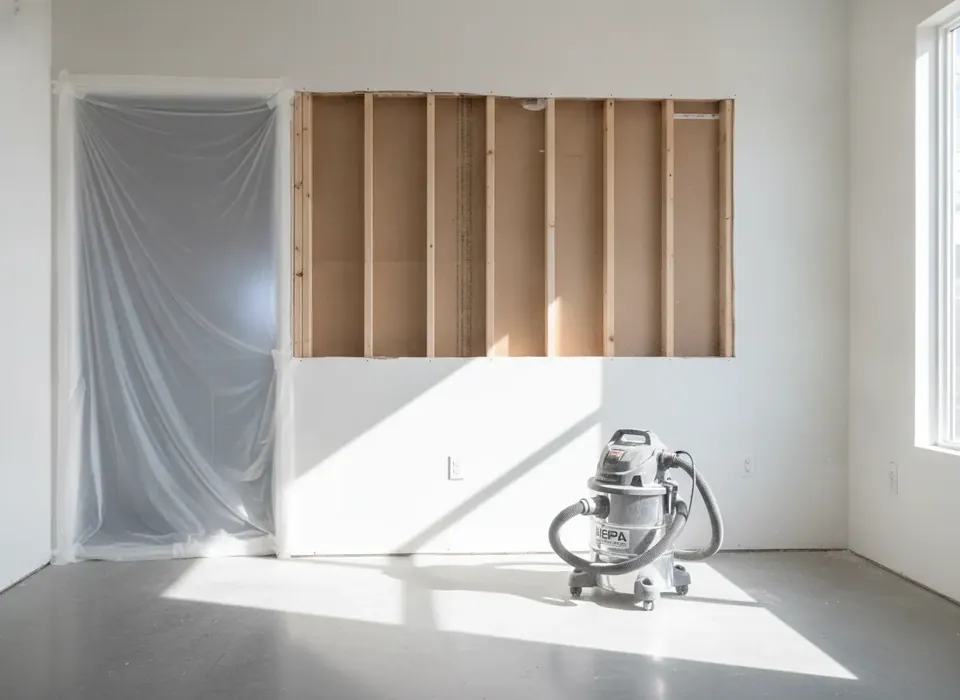
What is going on behind that stain
Mold needs spores, food and water. The first two are already in your house. Water is the part you can control, and in Plano it shows up in a few predictable ways.
Summers here are long and humid, with DFW dew points in the mid-60s for about five months. Nearly every Collin County home sits on a slab over shrink-swell Blackland clay, so instead of a wet basement you get a slab leak soaking a wall from below. Add an attic air handler, a hail-tested roof and the burst pipes of February 2021, and you have the usual sources.
Scrubbing the stain is the easy part. The companies we connect you with are judged on whether they find the water, keep spores contained while they work and prove the materials are dry before the wall is closed.
Not sure what you are looking at? Start with a licensed mold assessment.
What a licensed Texas mold job includes
For hired work of 25 contiguous square feet or more, Texas law lays out the steps. Two different licensed companies are involved; the same company may not do both on one project.
Assessment and moisture mapping
A TDLR-licensed mold assessment consultant meters the walls and floor, traces the water source and marks how far the damage runs.
Written protocol
The assessor writes a protocol specific to your house: rooms, quantities, methods, containment and clearance criteria. You get it at least a day before work starts.
Work plan and TDLR notification
A separate TDLR-licensed remediation company writes a work plan that follows the protocol and notifies TDLR five days ahead, or by the next business day in a water-damage emergency. The fee is $25.
Containment and negative air
Plastic sheeting, a zipper door and a HEPA air scrubber keep spores out of the rest of the house. Yellow project signs go up at the entrances.
Removal
Porous material with growth, such as drywall, insulation and carpet pad, is cut out and bagged inside containment. Framing and concrete are HEPA vacuumed and cleaned.
Drying
Air movers and dehumidifiers run until framing and slab reach the protocol's dry target. Drying usually sets the schedule.
Clearance assessment
The assessor returns while containment is up, checks visually and by any sampling the protocol calls for, and writes a passed clearance report.
Certificate of Mold Damage Remediation
Within 10 days of finishing, you receive the certificate (TDI form MDR-1), signed by both companies. Details on the process page.
Mold removal across Plano's housing stock
Plano's median home was built in 1993 and 64 percent of its units went up between 1970 and 1999. Roughly one in six predates 1980. The older east and central tracts tend to have original cast-iron drains under the slab, which is why slab leaks are so often the cause. West Plano homes from the 1990s and 2000s are two stories with the air handler in the attic, and sat under the June 2012 and April 2016 hail paths.
The same companies quote across Frisco, McKinney, Allen, Richardson, Wylie, Murphy, The Colony and Carrollton.
Where the mold is changes the job: slab leak, burst pipe or water damage, attic and roof leak, bathroom and ceiling, HVAC, duct and AC, black mold or an apartment, condo or commercial building.
What mold removal costs in Plano
Size, material removed, containment, drying and rebuild drive the number. Assessment, protocol and clearance are separate invoices from a separate company.
| Item | Typical range | Source |
|---|---|---|
| Mold remediation, per sq ft | $10–$25 (avg ≈ $18) | This Old House 2026; Fixr 2025 ($10–$30) |
| Typical whole job | $1,500–$9,000 (national avg ≈ $3,500) | Fixr 2025 |
| Small area ≈ 50 / 100 / 200 / 500 sq ft | $500–$1,250 / $1,000–$2,500 / $2,000–$5,000 / $5,000–$12,500 | This Old House 2026 |
| Whole house | $10,000–$30,000 | Fixr 2025 |
| Mold inspection / testing (licensed assessor, separate company) | $303–$1,044 (avg ≈ $670); air-sample lab fees $250–$350 | HomeAdvisor 2025 |
| TDLR notification fee (25+ sq ft jobs) | $25 | TDLR |
| Plano per sq ft (dated) | $10–$19 | HomeBlue, Mar 2022 (dated) |
Typical published ranges, not quotes (Fixr Aug 2025, This Old House Mar 2026, HomeAdvisor 2025). Plano quotes come from the companies, not from this site.
Room-by-room ranges and a square-foot estimator are on the mold remediation cost guide. Get at least two written quotes.
Texas rules, insurance and permits
The 25 square foot line. Under 25 contiguous square feet you may clean it yourself or hire anyone. At or above it, hired work needs licensed companies, a written protocol, a work plan, TDLR notification, containment, clearance and the certificate. Unlicensed work carries a $2,000 to $5,000 TDLR penalty per violation, and up to $5,000 a day under Occupations Code 51.302.
The certificate is your protection. Under Insurance Code 544.303, an insurer may not underwrite against your home because of remediated mold damage shown on a Certificate of Mold Damage Remediation, and sellers must give buyers every certificate from the prior five years. Ask for it by name: TDI form MDR-1.
Insurance. Texas policies usually cover a sudden and accidental discharge of water and usually do not cover a continuous leak. Most pay to remove mold only as part of repairing covered damage, and many cap or exclude mold remediation unless endorsed. Report hidden losses within 30 days of discovery. Nothing here promises coverage.
Permits. Cutting out and cleaning mold-damaged material usually needs no Plano permit. Plumbing, foundation, HVAC, roof and wall rebuilds do, by city-registered contractors; confirm with Plano Building Inspections.
Older homes. For a pre-1978 home, ask about an EPA Lead-Safe Certified rebuild contractor and asbestos sampling before tear-out. Questions, not blanket requirements.
When it is urgent
- Water is still coming in. Shut the main and get a plumber or roofer moving first.
- Materials have been wet more than 24 to 48 hours, the EPA window before mold can start, or the water was sewage.
- Someone in the home has asthma or new breathing symptoms. See a doctor.
- You rent. Put the request in writing; see the apartment and renter page.
Questions to ask every company
- What is your TDLR license number? Verify it at tdlr.texas.gov/LicenseSearch.
- Can you send the Consumer Mold Information Sheet and proof of $1 million liability insurance before work?
- Who is the separate licensed assessor writing the protocol and doing clearance?
- What is the moisture source, and who fixes it?
- Will I receive the Certificate of Mold Damage Remediation within 10 days?
Get mold removal quotes in Plano
Tell us where the mold is, roughly how big the area is and what got wet. We pass it to independent, licensed Texas assessment and remediation companies, and they reply with quotes.
Independent, TDLR-licensed Texas companies reply to you directly. No obligation, and you choose who to hire. Prefer to talk? Call (972) 472-8749
Mold removal questions
Is mold removal the same as mold remediation in Texas?
Companies use both words, but Texas law uses remediation: the removal, cleaning, sanitizing, demolition or other treatment of mold-contaminated material. On a hired job of 25 contiguous square feet or more, it also means a protocol from a separate licensed assessor, containment, clearance and a Certificate of Mold Damage Remediation. Judge quotes by whether those steps are in writing.
Can I clean up the mold myself?
Under 25 contiguous square feet, Texas lets a homeowner clean it or hire anyone; the EPA suggests gloves, eye protection and an N95. Growth inside walls, in an attic or ducts, after sewage or a slab leak, or where someone has asthma is a reason to get quotes instead. If a DIY job uncovers 25 square feet or more, the exemption is lost and licensed companies must finish it.
Do mold removal companies in Plano need a license?
Yes, for hired work of 25 contiguous square feet or more. Occupations Code chapter 1958 requires a TDLR remediation license for the company doing the removal and a separate assessment license for the company writing the protocol and doing clearance. Check any license at tdlr.texas.gov/LicenseSearch. Unlicensed work carries penalties of $2,000 to $5,000 per violation.
How long does mold removal take?
A contained closet or bathroom job is often a day or two. A wall that got wet from a slab leak can run a week once drying is counted, and the assessor's clearance visit has to happen before containment comes down. Rebuild is usually a separate trade. Ask each company for a written timeline that includes drying and clearance.
Will the mold come back after remediation?
It can if the water does. The EPA puts it simply: fix the water problem or the mold will most likely return. In Plano that usually means a plumber, a roofer or an HVAC contractor in addition to the mold company. The Certificate of Mold Damage Remediation includes the assessor's statement that the underlying cause was addressed, one reason to ask for it by name.
Seeing or smelling mold? Get a clear plan.
Free, no-pressure quotes from independent Texas-licensed companies across Plano, Frisco, McKinney, Allen and Collin County.